

Stores that stay calm
on your busiest day
We design and engineer your storefront and checkout together with the stock, payment and fulfillment systems behind them, then test them ahead of launches and sales, so the store is ready when demand peaks.
Thanks, we’ll be in touch soon.
{{ heroStatus }}
You’re in good company
A few of the companies we’ve worked with.
What happens after ‘Place order’
The storefront is the part people see. Behind each order, stock is reserved, the payment is authorized, the order reaches the people who pack it and the systems that account for it, and the customer is told what happens next.
We build that whole path, including the moments it doesn’t go to plan: a declined payment, an item that sold out while it sat in a basket, a delivery that needs to change, a return.
What we build
From the product page to the parcel.
In front of the customer
Storefronts
Fast, accessible storefronts on the platform that suits your catalog, with pages your team can update without waiting for a developer.
At checkout
Checkout and payments
A short, clear checkout with the payment methods your customers expect.
Behind the scenes
Integrations
Connections to your ERP, stock, fulfillment, tax, shipping and accounting systems, so orders, stock and prices stay in step without anyone typing them in twice.
The right platform for your store
Most stores are best served by an established platform. Some outgrow what it does well: complex pricing, unusual products, several brands or markets, or systems it wasn’t built to work with.
A platform as it comes
For catalogs and processes the platform already handles well. The quickest to launch and the simplest to run.
A platform with custom parts
Your own apps, integrations or checkout steps, added where the platform stops, while it keeps doing the rest.
A headless storefront
A front end designed for your brand and built for speed, on top of the platform’s catalog, orders and payments.
Custom commerce
For pricing, products or operations no platform fits, built around your own order and stock systems.
We’ll recommend the simplest option that fits, and explain what each would ask of your team.
Stores on Shopify:Shopify Development
Stores on WooCommerce:Development for WooCommerce
Stores on Adobe Commerce or Magento Open Source:Development for Adobe Commerce
Ready for your busiest day
A sale, a launch or a busy season is when a store is tested hardest. These are part of every project, not extras before the big day.
Fast on real phones
We set performance targets early, measure them with Google’s Core Web Vitals and test on the phones and connections your customers actually use.
Secure by design
Admin access is limited to the people who need it, and the platform and its apps are kept up to date.
Accessible to every customer
Checked against the WCAG guidelines, so people using a keyboard, a screen reader or zoom can find what they need, choose it and pay.
AI where it helps people buy
Some of the most useful AI in a store is quiet: search that understands what someone means, product details drafted for your team to check, or an assistant that answers questions about orders and returns from your own policies, with a person when it matters. We add it where it solves a real problem, then test and monitor it like any other feature.
- Washed linen, soft from the first wearMK
- A relaxed fit: order your usual sizeMK
- Machine wash cold and dry flatDraft
Our work
-
![Nerida’s configurator on a phone: the oval solitaire, with the stone, setting, metal, carat and engraving to choose and a button to try it on in AR]()
Nerida Fine Jewellery
A made-to-order configurator that prices each commission live as the shopper chooses the stone, setting and metal, feeding the one order sheet the atelier works from.
-
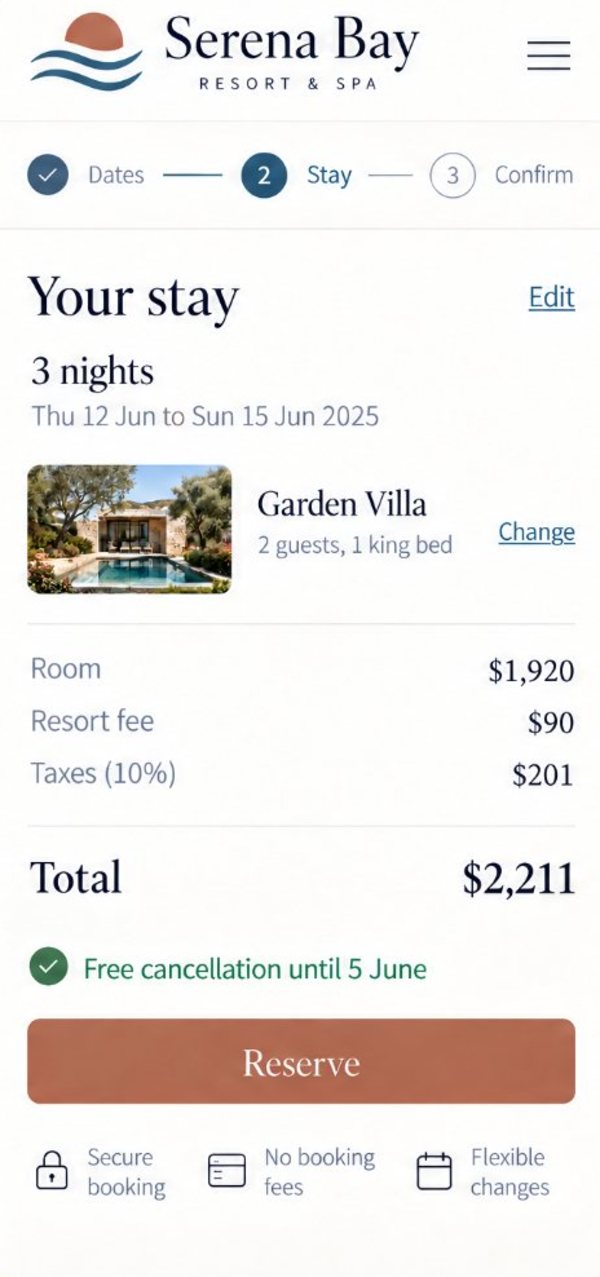
![Serena Bay’s stay summary on a phone: the villa and dates, the room rate, resort fee and taxes shown before the total, free cancellation and the button to reserve]()
Serena Bay Resort & Spa
A direct booking engine with live rates for each suite and every fee shown upfront, and one login that follows the guest through their stay.
-
![Oreya’s morning routine on a phone: three steps, each with the reason it suits the customer’s skin]()
Oreya
A skincare shop built around a short routine builder, so each customer leaves with a routine rather than a guess.


After launch
Launch is when you start learning what customers really do.
Work with us as a dedicated team, on a fixed price project or a mix of both.
How each is paid for: Pricing
Let’s build it better
Tell us about your store, the systems behind it and what’s holding it back. We’ll talk through the options and suggest a sensible first step.
Thanks, we’ll be in touch soon.
{{ ctaStatus }}